
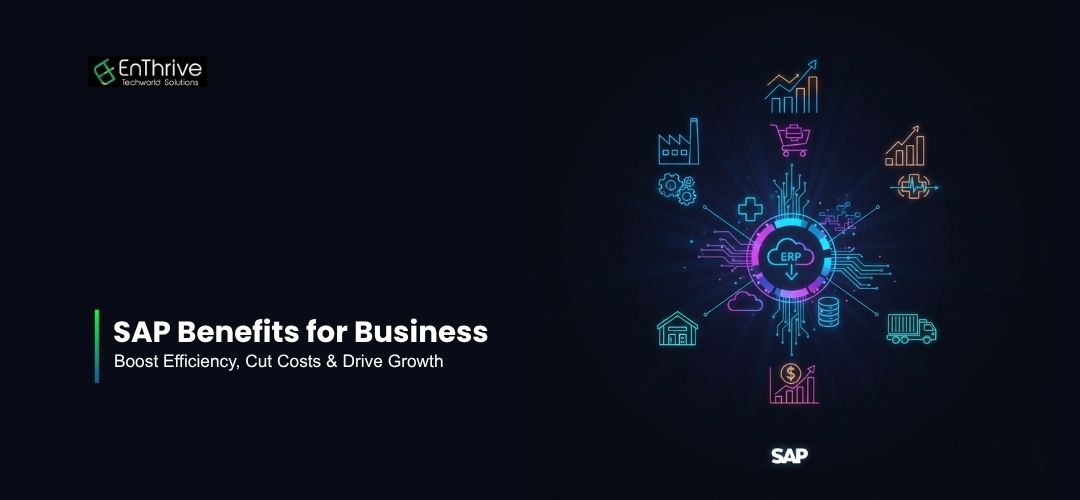
Key Benefits of SAP Implementation for Modern Businesses.
In today’s competitive business environment, organizations need robust solutions to manage their operations efficiently. SAP (Systems, Applications, and Products) is one of the leading enterprise resource planning (ERP) solutions that helps businesses streamline processes, reduce costs, and boost productivity.
What is SAP?
SAP is a comprehensive ERP software that integrates all key business functions into a single platform. From finance and human resources to supply chain and customer management, SAP ensures that businesses have a centralized system to manage data, automate processes, and improve decision-making.
SAP is designed to support businesses of all sizes, making operations faster, smarter, and more efficient.
How Does SAP Help in Business?
SAP provides a centralized system that integrates all core business functions. By consolidating information, it enables businesses to make informed decisions, improve collaboration, and respond faster to market changes.
Key ways SAP helps businesses:
- Centralized Data Management: All departments access the same accurate data.
- Real-Time Reporting: Instant insights for faster, data-driven decisions.
- Automation of Processes: Reduces manual tasks and human errors.
- Enhanced Customer Experience: Track and respond to customer needs efficiently.
Benefits of Using SAP
Implementing SAP brings multiple advantages:
Improved Efficiency and Productivity
- SAP automates routine tasks, enabling employees to focus on strategic initiatives.
Cost Reduction
- Optimized workflows and reduced redundancy save operational costs.
Data-Driven Decision Making
- Real-time insights allow managers to make informed decisions quickly.
Scalability
- SAP grows with your business, supporting new processes, locations, and business units.
Compliance and Risk Management
- SAP helps maintain industry compliance, reducing risks.
Industries Where SAP Can Help
SAP is versatile and supports multiple industries. Some examples:
1. Manufacturing
How it helps: Optimizes production planning, inventory management, and quality control.
2. Retail
How it helps: Manages supply chains, customer data, and sales analytics for better decision-making.
3. Finance
How it helps: Streamlines accounting, financial reporting, and compliance.
4. Healthcare
How it helps: Enhances patient data management, billing, and operational efficiency.
5. Logistics and Supply Chain
How it helps: Tracks shipments, manages warehouse operations, and improves delivery timelines.
6. IT and Technology
How it helps: Integrates project management, resource allocation, and client management.
What Do Businesses Use SAP For?
Businesses use SAP for a variety of purposes:
- Finance and Accounting: Transactions, reporting, and audits.
- Human Resources (HR): Payroll, recruitment, and talent management.
- Supply Chain Management (SCM): Logistics, procurement, and inventory control.
- Customer Relationship Management (CRM): Customer tracking and retention.
- Manufacturing: Production scheduling, quality assurance, and optimization.
Why SAP is Important for Business Growth
SAP is more than software; it’s a strategic tool for growth. Businesses adopting SAP experience improved operational efficiency, better decision-making, and enhanced collaboration. SAP empowers organizations to stay competitive and achieve long-term success.
Conclusion
SAP Implementation Benefits for Business are clear: from automating processes to providing real-time insights, SAP helps organizations reduce costs, improve efficiency, and scale operations. Businesses across industries—from manufacturing to healthcare—can leverage SAP to gain a competitive advantage and drive sustainable growth.